AI Agent Operations Playbook: 2026 Guide: 2026 Guide (+ Templates & ROI Benchmarks)
Updated: March 2026
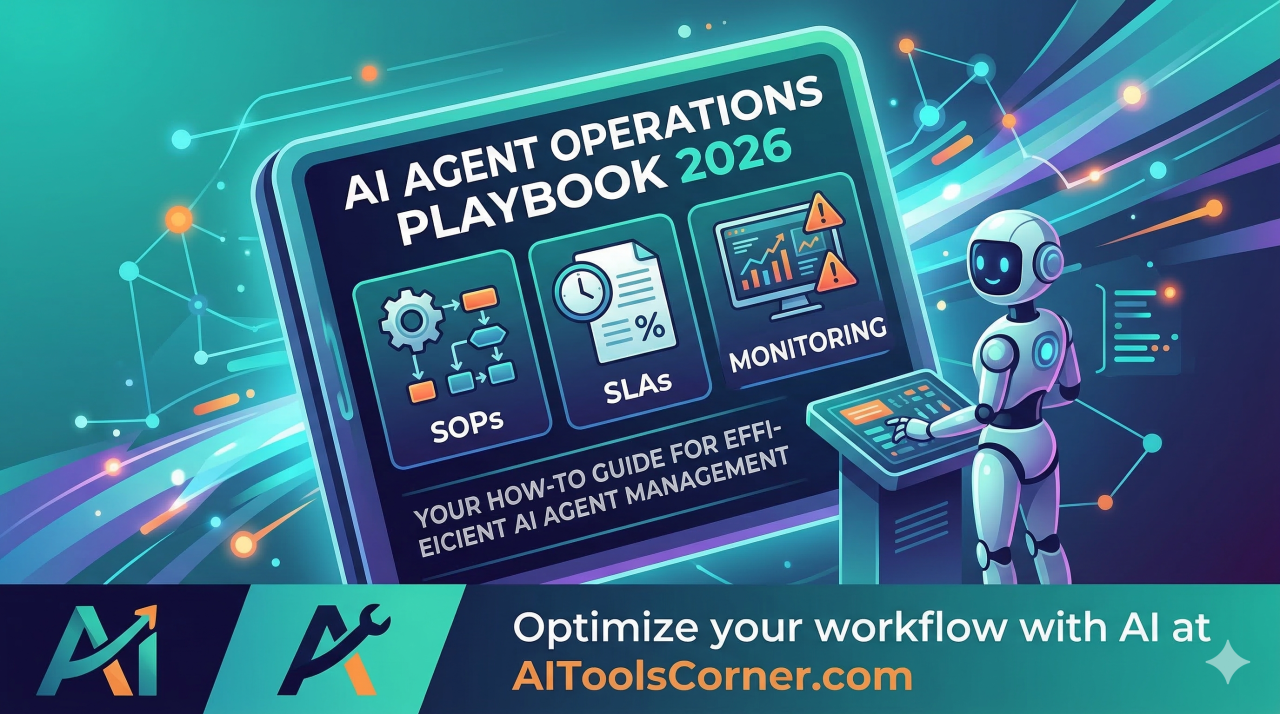
After launch, operations quality determines retention. This playbook gives a practical operating model for reliability, support, and delivery consistency.
SLA Tier Design
- P1: acknowledge in 15 min, mitigate in 60 min
- P2: acknowledge in 1 hour, mitigate in 4 hours
- P3: acknowledge in 4 hours, resolve within 24-48 hours
Observability Stack
- Trace every tool call
- Alert on latency spikes and loop failures
- Track per-workspace cost and error rate
- Monitor fallback routing events
Incident Lifecycle
- Detect
- Classify severity
- Isolate impact
- Mitigate
- Communicate ETA
- Postmortem + SOP update
Reliability KPIs
- Workflow completion rate
- MTTD and MTTR
- Error recurrence rate
- SLA attainment rate
Playbook Connections
FAQ
What KPI should I monitor first?
Start with workflow success rate and MTTR; they directly reflect service stability and client trust.