AI Agent as a Service (AIaaS) in 2026: Practical Playbook for Scalable Agentic Ops

Updated: March 2026. This page is reviewed for relevance, quality, and practical implementation value.
AI Agent as a Service (AIaaS) is the execution model for deploying Agentic AI in real business operations. In 2026, successful teams are no longer testing isolated prompts—they are running governed, KPI-driven AI Agent Orchestration across sales, support, content, and reporting workflows.
This playbook is designed for operators who need implementation detail, not theory. You will find architecture guidance, rollout phases, governance checkpoints, and practical examples to help scale autonomous AI workflows safely.
Quick Answer
AI Agent as a Service means packaging agentic workflows as reusable services (lead qualification, support triage, content ops, analytics) instead of one-off bots.
AI Agents Collection: What to Deploy First
- Lead qualification agent
- Customer support triage agent
- Content/SEO ops agent
- Sales follow-up + CRM update agent
- Reporting and analytics agent
Reference Architecture (Agentic AI)
- Intake layer: forms, chat, API, and messaging channels
- Reasoning layer: prompts, policies, memory, and tool-calling
- Action layer: CRM, helpdesk, docs, analytics, and notifications
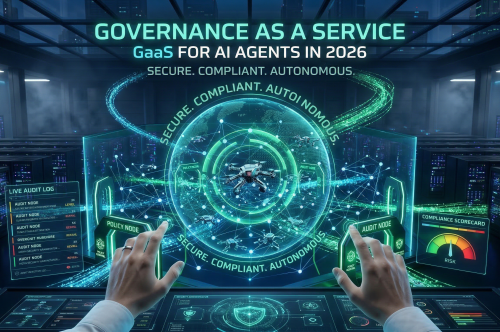
- Governance layer: approval gates, logs, policy enforcement, rollback
Implementation Checklist (Expanded How-To)
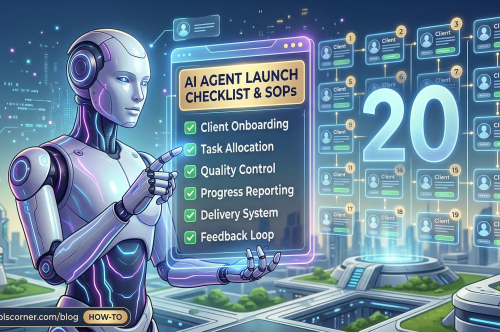
1) Define one high-impact workflow
Start by selecting a visible business bottleneck in Admissions, HR, Support, or Sales Ops. Map the full journey from request intake to final action. Identify where delays, handoff errors, or repetitive manual work reduce service quality. Then define one workflow objective (for example: reduce first-response time by 40% in support triage).
Convert this objective into an agentic sequence: classify intent → fetch policy/context → generate action recommendation → apply approval logic → execute system update. This translation step is critical because it turns abstract AI enthusiasm into measurable operational design.
2) Design orchestration and integration boundaries
Before coding, define system boundaries: which systems can the agent read, which actions it can execute, and where human sign-off is mandatory. Legacy stacks (PHP/Laravel/CodeIgniter) should remain stable while orchestration is layered on top using APIs and middleware connectors. Avoid direct replacement of core systems during phase one.
3) Deploy with governance checkpoints
Implement policy checkpoints at each high-risk transition. Examples include spend limits, semantic filters for sensitive data, mandatory manager approval for early outbound actions, and confidence thresholds that reroute uncertain outputs to human review. Governance should be embedded in the workflow—not added after incidents occur.
4) Measure and optimize weekly
Track operational KPIs from week one: resolution accuracy, cycle time, incident rate, and compute cost per completed task. Use weekly reviews to tune routing logic, model selection, and prompt instructions. Scale only when quality and control metrics are stable for at least 2-3 consecutive cycles.
Case Study Scenario (Practical)
A mid-sized organization starts with a basic chatbot that only answers FAQs. Over 90 days, they evolve to an autonomous workflow using orchestration + governance:
- Phase 1: FAQ assistant with retrieval
- Phase 2: triage agent that classifies, prioritizes, and drafts next actions
- Phase 3: integrated workflow agent updates CRM/helpdesk after approvals
- Phase 4: reporting agent publishes weekly SLA, cost, and quality scorecards
Result: lower response times, fewer manual escalations, and clearer operational accountability.
Overcoming Legacy System Integration in AIaaS
Legacy environments are common in enterprise operations. The best approach is progressive integration:
- Expose stable API endpoints around legacy modules
- Introduce orchestration adapters rather than rewriting core applications
- Use queue-based handoffs for resilient asynchronous automation
- Retain rollback options for each automated action
AI Agent Governance Checkpoints
- Role-based permissions and environment segregation
- Policy rules for high-risk intents and data classes
- Prompt/version controls with change history
- Full audit logs for decision transparency
- Incident response playbook for automation misfires
Video Companion Strategy
Embed a companion video near the top: “AI Agent as a Service 2026 Playbook Explained.” A bilingual Urdu/Hindi explainer with English subtitles can significantly improve dwell time and regional discovery.
Internal Resources
- Enterprise AIaaS Execution Guide
- GaaS Governance Framework
- GaaS Adoption Blueprint
- AI Tools for Agentic AI
External References
Execution CTA
Next step: run a 14-day pilot on one high-impact workflow and benchmark resolution accuracy, cycle time, and cost per task before scaling your AI Agents collection.
FAQ
What is AI Agent Orchestration in AIaaS?
It is the structured coordination of multi-step agent workflows with policy controls, tool integrations, and measurable output quality.
How quickly can an enterprise deploy AIaaS?
Most teams can launch one controlled workflow in 30 days, add governance in 60 days, and scale cross-functional automation in 90 days.
Can legacy teams adopt AIaaS without replacing existing apps?
Yes. A phased API-first integration model is often the safest and most cost-effective path.
How We Evaluated This Topic
- Reviewed practical workflow fit for real teams
- Compared quality, speed, governance, and cost signals
- Prioritized use-case alignment over hype features
Related Strategic Guides
- AI Agent as a Service Playbook
- Enterprise AIaaS Execution Guide
- GaaS Governance Framework
- AI Tools for Agentic AI
Custom Expert Expansion 2026: 30-60-90 Execution Blueprint
- 30 days: single workflow pilot with baseline KPIs
- 60 days: governance checkpoints + observability rollout
- 90 days: multi-workflow scale with monthly executive scorecard
Integration Priority Stack
- CRM / support desk connectors
- Knowledge retrieval + policy layer
- Action execution and approval queue
- KPI dashboard with weekly optimization loop
ROI Formula
((Time saved × blended hourly rate) + conversion uplift value) − tool and infra cost
Comprehensive Practical Guide for AI Agent as a Service (AIaaS) in 2026: Practical Playbook for Scalable Agentic Ops
This expanded section strengthens the article for search intent, user clarity, and implementation depth. Instead of only listing features, it explains how to evaluate outcomes, avoid weak tool choices, and create a repeatable execution process. Readers usually want to understand not just what a tool claims, but how it performs under real workflow conditions such as deadlines, quality standards, budget limits, and team adoption challenges.
When evaluating AI Agent as a Service (AIaaS) in 2026: Practical Playbook for Scalable Agentic Ops, start by defining one measurable goal before trying multiple tools at once. Typical goals include reducing turnaround time, improving output consistency, or increasing qualified traffic from organic search. Once a single goal is set, compare tools using one fixed benchmark task so quality differences are visible. This avoids random testing and helps you identify whether a tool can support production-level use rather than one-off experiments.
Evaluation Framework and Decision Criteria
A reliable evaluation framework should include six dimensions: quality, speed, control, integration, governance, and total cost. Quality means the final output is accurate, usable, and aligned with your publishing standards. Speed means the tool improves cycle time without creating additional revision overhead. Control means prompts, settings, and workflows are configurable enough for your team. Integration means the tool can connect with your existing stack such as CMS, analytics, or collaboration systems. Governance includes privacy, permissions, and content safety checks. Total cost includes subscription fees, hidden onboarding time, and quality assurance effort.
For stronger decisions, score each dimension on a simple 1-to-5 scale. Then apply weighted importance based on your business model. For example, an SEO-first content site may prioritize quality and consistency, while an agency environment may prioritize collaboration and speed. Weighted scoring prevents emotionally biased choices and gives a data-backed reason for selecting one platform over another. This method also helps when presenting recommendations to stakeholders who need clear trade-off visibility.
Implementation Roadmap (30-60-90 Day Model)
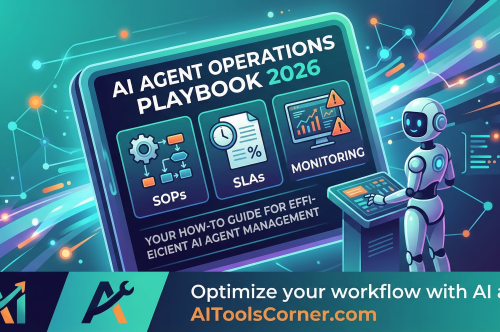
In the first 30 days, focus on baseline measurement and pilot setup. Document current workflow time, current quality pass rate, and current output volume. Then run a focused pilot with one use case only. In days 31 to 60, expand to a second use case and add standard operating procedures, QA checklists, and approval gates. In days 61 to 90, optimize performance by refining prompts, building reusable templates, and introducing dashboard tracking for outcome metrics. This phased approach minimizes risk while increasing confidence.
During rollout, define ownership clearly. One person should own prompt standards, one should own publishing quality, and one should own KPI reporting. Even small teams benefit from role clarity because it prevents bottlenecks and random process changes. If the team is solo, create a weekly review block to assess output quality and update templates. Consistent review cycles are what turn an AI-assisted process into a dependable production system.
SEO and Content Performance Recommendations
For SEO improvement, align headings to clear intent clusters: definition, comparison, implementation, pitfalls, and FAQ. Add examples with context-rich language that mirrors user queries. Include practical terms readers actually search, not only vendor slogans. Keep paragraphs concise, improve transition logic, and add internal links to related strategic guides so authority can flow between relevant pages. This strengthens topical depth and helps crawlers understand the relationship between adjacent content themes.
On-page optimization should include precise metadata, strong intro context, and semantic breadth around adjacent entities. For example, content discussing tools should also address adoption constraints, integration realities, and decision frameworks. This expands ranking opportunities across mid-tail and long-tail queries. It also increases dwell time because users find complete answers in one session rather than leaving for supplemental explanations.
Common Mistakes and How to Avoid Them
One common mistake is evaluating tools only from demo outputs. Demo conditions are optimized and often do not represent live production complexity. Another mistake is scaling too early without quality governance, which leads to inconsistent tone, factual drift, and rework. A third mistake is ignoring change management; teams need simple training and documentation to adopt new workflows confidently. Prevent these issues by running controlled pilots, maintaining QA rules, and reviewing weekly outcomes before wider rollout.
Another frequent error is tracking vanity metrics instead of business outcomes. High output volume alone is not a success metric if conversion quality declines. Focus on practical KPIs such as time saved per asset, acceptance rate after first draft, organic traffic growth for target pages, and revenue-linked conversion lift where measurable. Decision quality improves significantly when performance is tied to outcomes that matter commercially.
Action Checklist
- Define one primary objective and one benchmark task.
- Score options using quality, speed, control, integration, governance, and cost.
- Launch with a 30-day pilot before broader deployment.
- Implement QA checklists and approval gates.
- Track KPI impact weekly and refine templates continuously.
- Strengthen internal linking and semantic coverage for SEO durability.
Advanced Optimization Layer
After initial success, introduce an optimization layer that includes prompt libraries, role-based templates, and scenario-specific quality rubrics. This allows faster onboarding and more predictable outputs across contributors. Build a small repository of high-performing examples and annotate why they worked. Over time, this creates institutional memory and reduces dependency on ad-hoc experimentation.
If relevant keywords for this page include ai agent as a service, AIaaS framework, agentic ai, ai agent orchestration, autonomous ai workflows, enterprise ai operations, weave them naturally into explanatory sections, comparison headings, and FAQ language without forcing repetition. Natural semantic inclusion improves discoverability while preserving readability. The objective is not keyword stuffing; the objective is clear topical authority supported by useful, implementation-ready guidance.