Autonomous AI Agents as a Service in 2026: Ultimate Solo Enterprise Blueprint (Business + Technical)

Autonomous AI Agents as a Service in 2026: Ultimate Solo Enterprise Blueprint (Business + Technical)

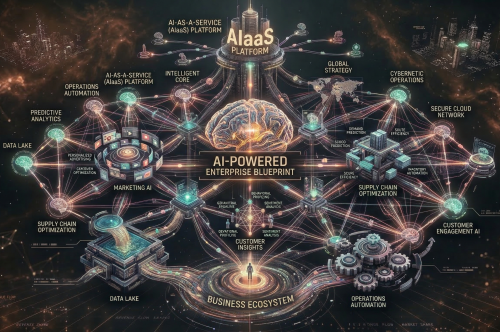
The enterprise software market is shifting from passive generative AI tools to autonomous agentic systems that execute multi-step workflows with minimal human intervention. For solo founders, this unlocks a rare opportunity: building an AI Agents as a Service (AaaS) company where agents are both the product and the internal workforce.

Executive Summary: Why 2026 Is the Inflection Point

Enterprise demand now favors outcome-driven systems over generic wrappers. Customers and investors reward platforms with workflow defensibility, deep integrations, and domain expertise. This is why vertical AI agents are showing stronger growth and retention compared to horizontal chatbot offerings.

  • Shift from reactive AI to autonomous execution systems
  • Growing preference for integrated, specialized AI workflows
  • Clear monetization through measurable operational ROI

The Meta-Agency Model: A Company Run by AI Crews

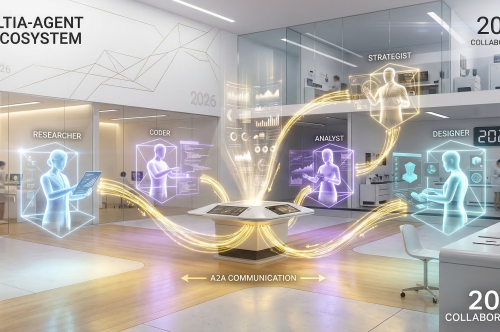
A solo AaaS operation should be structured as a multi-agent system with strict role boundaries and accountability loops.

1) Product Engineering Crew

  • Builds and deploys client-facing agents
  • Runs tests, security checks, and release pipelines
  • Maintains orchestration logic and integrations

2) Marketing and Growth Crew

  • Executes agentic SEO and content expansion
  • Manages outbound demand generation
  • Optimizes funnel conversion with continuous feedback

3) Financial and Billing Crew

  • Usage metering and invoice generation
  • Subscription lifecycle and dunning workflows
  • Pricing optimization using internal analytics agents

4) Operations and Support Crew

  • Monitors uptime and incident response
  • Triage, escalation, and SLA tracking
  • Client support automation with secure context access

Agent-to-Agent Protocol and MCP Context Layer

Autonomous departments require reliable asynchronous communication. An A2A protocol standardizes capability discovery and task delegation via structured payloads. Each agent publishes an Agent Card including capabilities, required inputs, output contracts, and trust requirements.

Model Context Protocol (MCP) standardizes secure access to tools, data stores, and enterprise systems without exposing raw credentials to model prompts. This significantly improves security, portability, and maintainability.

Best Vertical Opportunities for a Profitable AaaS Portfolio

High-margin verticals share four traits: repetitive workflows, expensive human alternatives, measurable outcomes, and compliance pressure.

VerticalCore ProblemAgent CapabilityMonetization Model
Voice AI Support OpsHigh call-center cost and attritionReal-time multimodal support + CRM syncPer-minute usage or tiered plans
Outbound SDRExpensive and inconsistent pipeline creationLead scoring + personalized outreach + schedulingPer-seat monthly + performance bonus
Fraud DetectionFinancial leakage and delayed detectionAnomaly + risk pattern analysisValue share (% of prevented loss)
Pricing IntelligenceManual SKU monitoring is too slowScraping + optimization + forecastingSKU-volume and frequency based tiers
Legal Contract ReviewHigh legal review overhead for SMEsClause risk scoring + precedent checksPer-document + premium retainers

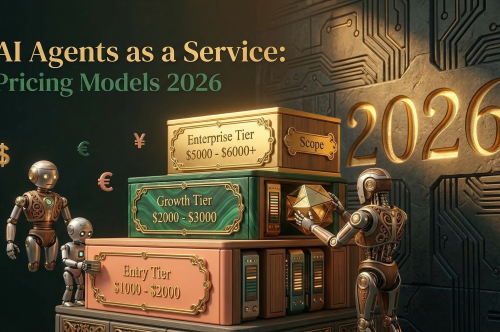
Revenue Design: Subscription + Usage + Performance

The most resilient AaaS pricing model combines:

  1. Fixed access fee for platform availability and support tier
  2. Usage metering based on actions, tokens, runtime, or API volume
  3. Performance-linked upside where outcomes are auditable

An internal pricing analyst agent should continuously monitor elasticity, competitor plans, and margin thresholds, then auto-adjust packaging rules within guardrails.

Autonomous Engineering and CI/CD Pipeline

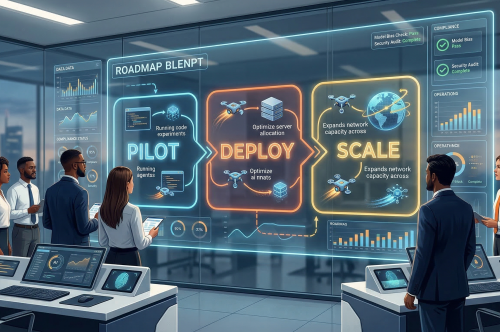
Without a human engineering team, development must be orchestrated as a deterministic loop:

  1. Requirement parsing into machine-readable specification
  2. Dependency graph and context mapping
  3. Sandboxed code generation
  4. Static analysis, secrets scanning, and policy checks
  5. Reviewer-agent validation and self-healing retries
  6. Automated deployment after quality gates pass

This converts development into a repeatable production system instead of ad-hoc experimentation.

Framework Strategy: Hybrid > Single Stack

  • CrewAI for deterministic, role-based workflows
  • AutoGen for dynamic conversational problem solving
  • LangGraph for stateful cyclic workflows and memory control
  • OpenAI Agents SDK for lightweight routing and fast delivery

A robust architecture uses deterministic orchestration by default and escalates to dynamic reasoning subroutines only when required.

Production Infrastructure Blueprint

  • Compute: serverless functions for elastic execution
  • Queueing: asynchronous task buffers for long jobs
  • State: distributed key-value/noSQL persistence
  • Storage: object store for unstructured artifacts
  • Retrieval: vector DB for semantic memory and RAG
  • Access: API gateway for client-facing endpoints

This architecture avoids timeout-prone synchronous designs and supports high concurrency at controlled cost.

Quality Assurance: Measurable Reliability, Not Vibe Testing

Autonomous agents must be tested using explicit reliability metrics:

  • Context Precision: relevance ratio in retrieval output
  • Context Recall: coverage of all relevant facts
  • Faithfulness: response grounded in retrieved context
  • Answer Relevancy: alignment with user intent

Use CI blockers for failing scores and keep production traces under continuous observability to detect regressions early.

Autonomous Growth Engine: SEO + Outbound

An internal growth crew should run a perpetual loop: SERP scanning, opportunity mapping, strategic content generation, syndication, and conversion optimization. Pair this with autonomous outbound sequencing to maintain pipeline velocity without manual effort.

Financial Architecture for Global Solo Founders

For regions with constrained gateway support, structure legal and banking rails first, then automate billing operations end-to-end. The billing agent should handle usage aggregation, invoicing, reminders, delinquency workflows, and controlled account actions under restricted permissions.

Risk Management and Long-Term Defensibility

  • Adopt multi-model routing to reduce vendor lock-in risk
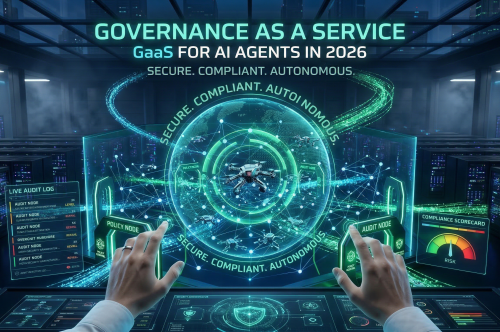
  • Apply strict RBAC and least-privilege controls per agent
  • Use human approval gates for sensitive financial/destructive actions
  • Feed production trace learnings back into prompts and policies

Final Verdict

The best AaaS businesses in 2026 are not thin chatbot wrappers. They are integrated, governed, measurable execution systems. For solo founders, this operating model enables enterprise-grade scale with minimal headcount and strong profitability when built on vertical specialization and disciplined architecture.

FAQ

What is Autonomous AI Agents as a Service?

It is a model where businesses subscribe to AI agents that execute operational workflows end-to-end, not just generate content.

Can a solo founder run this model?

Yes, if the business is structured as a governed multi-agent architecture with strict quality and security controls.

What is the strongest moat?

Workflow defensibility: deep integrations, domain specialization, and reliable execution quality over time.

Related Authority Guides