Wannafake Alternatives: Review of 6 AI Face Swap Tools (2026)
Updated: Refreshed for 2026 with clearer recommendations and latest relevance.
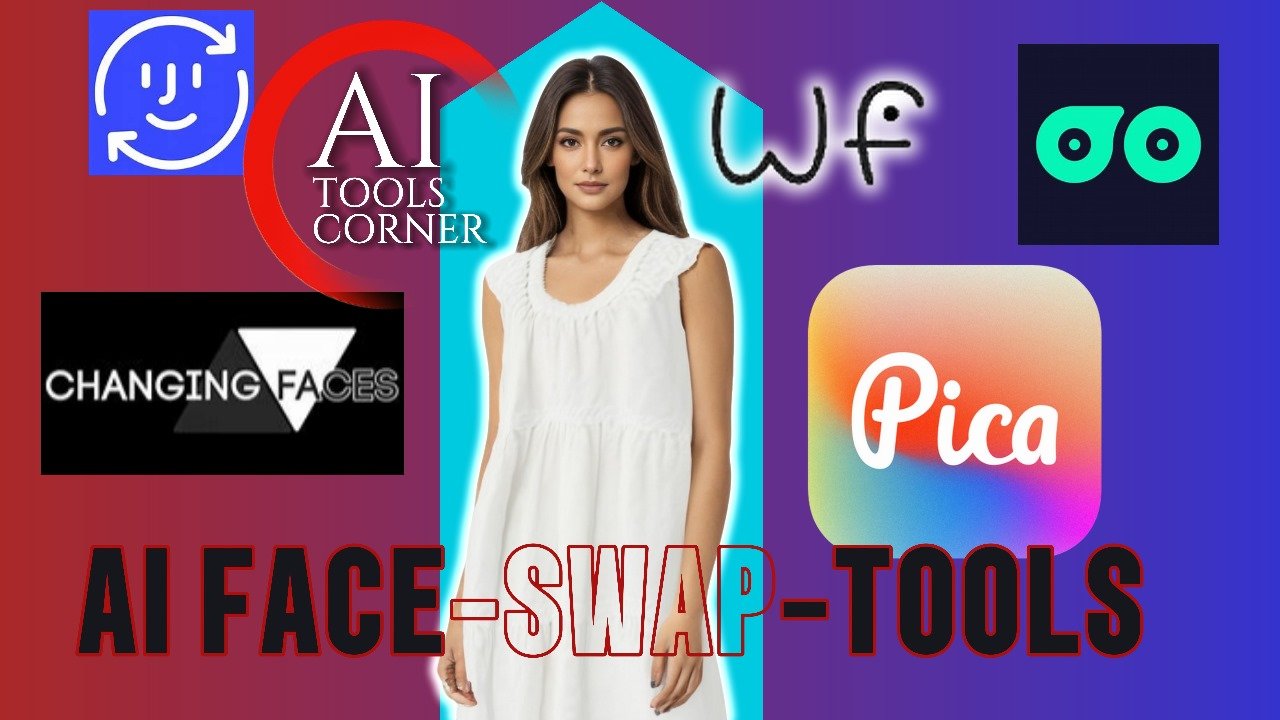
Remember that hilarious video of your friend's face replacing Tom Cruise in a Mission Impossible scene? The internet is obsessed with AI face swaps, and for good reason – they're a guaranteed laugh factory. But with so many apps out there, picking the right one can feel overwhelming. Fear not, fellow meme enthusiasts and content creators! This guide dives into the top AI-powered face swap tools – Wannafake, Anyoneswap, FaceMagic, ChangeFace, Pica AI, and DeepSwapper – to help you find your perfect match.
Stepping into the Spotlight – Wannafake is all about user-friendliness, letting you swap faces in both photos and videos. It's like training wheels for the face swap world, offering a free trial so you can experiment without breaking the bank. For those who crave unlimited edits and lightning-fast processing, a subscription unlocks the full potential. This makes Wannafake ideal for casual users and content creators who want to play around without feeling lost in tech jargon. (Hot on the Meme Streets: Wannafake funny swaps)

The Celebrity Swap Specialist – Another user-friendly option, Anyoneswap focuses on making you a star (or at least swap your face with one). They offer a free tier to get you started, but for serious celebrity impersonations, paid plans unlock features like batch processing and high-quality outputs. This makes Anyoneswap a dream come true for creators who want to churn out a steady stream of hilarious celebrity mashups. (Hashtag King/Queen: Anyoneswap celebrity swaps)

Mastering the Art of Realism – FaceMagic is the Michelangelo of face swaps, delivering stunningly realistic results. Imagine flawlessly blending your face onto your favorite movie scene – that's FaceMagic's magic. They boast a treasure trove of face swap templates, letting you create everything from laugh-out-loud scenarios to heartwarming tributes. FaceMagic offers a freemium model, so you can try before you buy, catering to both casual users who want a taste of pro-quality and professional creators seeking exceptional results. (Everyone's Saying: FaceMagic realistic swaps)

The King (or Queen) of GIFs and Memes – ChangeFace is all about those quick and dirty face swaps that fuel your social media. They offer a free basic version to get you started, but paid plans unlock faster processing, crystal-clear outputs, and more editing tools to take your memes to the next level. This makes ChangeFace the ultimate weapon for meme creators who want to keep their audience in stitches. (The Meme World Loves: ChangeFace meme swaps)

The Creative Editing Powerhouse – Pica AI goes beyond the basic face swap. Imagine removing that pesky object in your photo, replacing the background with a tropical beach, and then adding your friend's face onto a dancing flamingo – that's the kind of creative freedom Pica AI unlocks. They offer a free trial and paid subscriptions, catering to content creators who crave the ability to push the boundaries of image manipulation and surprise their audience with something truly unique. (Get Inspired By: Pica AI creative face swaps)

The Deepfake Mastermind (For Tech-Savvy Folks Only) – DeepSwapper is the black belt of face swaps, known for its mind-blowing deepfake capabilities. However, unlike the user-friendly apps above, this one requires some serious tech know-how. While the results are undeniably impressive, the learning curve can be steep. DeepSwapper is best suited for tech wizards and experienced content creators who want to explore the wild world of deepfakes. (For the Tech Geeks: DeepSwapper realistic deepfakes)

The Face Swap Showdown: Who Wins Your Heart (and Laughs)?
The world of face swap apps is a battleground of creativity, with each tool vying for your attention. Wannafake and Anyoneswap focus on ease of use, making them perfect for beginners. FaceMagic prioritizes stunning visuals, while ChangeFace caters to the meme-making masses. Pica AI offers a playground for creative expression, and DeepSwapper unlocks the power of deepfakes (for those brave enough to try).
Free vs Paid: Finding the Perfect Fit for Your Wallet
Most of these tools offer a freemium model, so you can experiment with basic features before committing. Wannafake, Anyoneswap, and ChangeFace all have free versions, while FaceMagic, Pica AI, and DeepSwapper provide free trials. Paid plans typically unlock features like faster processing, higher quality outputs, and more creative tools. Ultimately, the best pricing option depends on how often you plan to use the app and what features are most important to you.
Comparison of 6 AI Face Swap Tools
|
Tool Name |
Pricing Model |
Best For |
Key Features |
|
Wannafake |
Freemium (Free Trial, Paid Subscriptions) |
Casual Users & Budget-Minded Creators |
User-friendly interface, Photo & Video Swaps |
|
Anyoneswap |
Freemium (Free Tier, Paid Plans) |
Celebrity Swap Specialists & High-Volume Creators |
Easy-to-use, Photo Focus, Batch Processing |
|
FaceMagic |
Freemium (Free Version, In-App Purchases) |
Quality Seekers & Professional Creators |
Exceptional Results, Diverse Templates, Editing Tools |
|
ChangeFace |
Freemium (Free Basic Version, Paid Plans) |
Meme Creators & GIF Enthusiasts |
Photo & GIF Swaps, Fast Processing (Paid) |
|
Pica AI |
Freemium (Free Trial, Paid Subscriptions) |
Creative Editors & Advanced Users |
Powerful Editing Suite, Object Removal, Background Editing, AI Image Generation |
|
DeepSwapper (Desktop App) |
Paid (One-Time Purchase) |
Tech-Savvy Users & Deepfake Creators |
Exceptional Deepfakes (Learning Curve) |
SEO Refresh 2026: Key Improvements
- Better intent matching for search queries
- Stronger comparisons and decision help
- Improved on-page structure
Related Reads
FAQ
Why update old posts?
Freshness and improved structure can increase rankings and click-through rates.
How We Evaluated This Topic
- Reviewed practical workflow fit for real teams
- Compared quality, speed, governance, and cost signals
- Prioritized use-case alignment over hype features
Related Strategic Guides
- AI Agent as a Service Playbook
- Enterprise AIaaS Execution Guide
- GaaS Governance Framework
- AI Tools for Agentic AI
Execution CTA
Next step: select one high-impact workflow, run a 14-day pilot, and compare baseline vs post-automation quality, speed, and cost.
Comprehensive Practical Guide for Wannafake Alternatives: Review of 6 AI Face Swap Tools (2026)
This expanded section strengthens the article for search intent, user clarity, and implementation depth. Instead of only listing features, it explains how to evaluate outcomes, avoid weak tool choices, and create a repeatable execution process. Readers usually want to understand not just what a tool claims, but how it performs under real workflow conditions such as deadlines, quality standards, budget limits, and team adoption challenges.
When evaluating Wannafake Alternatives: Review of 6 AI Face Swap Tools (2026), start by defining one measurable goal before trying multiple tools at once. Typical goals include reducing turnaround time, improving output consistency, or increasing qualified traffic from organic search. Once a single goal is set, compare tools using one fixed benchmark task so quality differences are visible. This avoids random testing and helps you identify whether a tool can support production-level use rather than one-off experiments.
Evaluation Framework and Decision Criteria
A reliable evaluation framework should include six dimensions: quality, speed, control, integration, governance, and total cost. Quality means the final output is accurate, usable, and aligned with your publishing standards. Speed means the tool improves cycle time without creating additional revision overhead. Control means prompts, settings, and workflows are configurable enough for your team. Integration means the tool can connect with your existing stack such as CMS, analytics, or collaboration systems. Governance includes privacy, permissions, and content safety checks. Total cost includes subscription fees, hidden onboarding time, and quality assurance effort.
For stronger decisions, score each dimension on a simple 1-to-5 scale. Then apply weighted importance based on your business model. For example, an SEO-first content site may prioritize quality and consistency, while an agency environment may prioritize collaboration and speed. Weighted scoring prevents emotionally biased choices and gives a data-backed reason for selecting one platform over another. This method also helps when presenting recommendations to stakeholders who need clear trade-off visibility.
Implementation Roadmap (30-60-90 Day Model)
In the first 30 days, focus on baseline measurement and pilot setup. Document current workflow time, current quality pass rate, and current output volume. Then run a focused pilot with one use case only. In days 31 to 60, expand to a second use case and add standard operating procedures, QA checklists, and approval gates. In days 61 to 90, optimize performance by refining prompts, building reusable templates, and introducing dashboard tracking for outcome metrics. This phased approach minimizes risk while increasing confidence.
During rollout, define ownership clearly. One person should own prompt standards, one should own publishing quality, and one should own KPI reporting. Even small teams benefit from role clarity because it prevents bottlenecks and random process changes. If the team is solo, create a weekly review block to assess output quality and update templates. Consistent review cycles are what turn an AI-assisted process into a dependable production system.
SEO and Content Performance Recommendations
For SEO improvement, align headings to clear intent clusters: definition, comparison, implementation, pitfalls, and FAQ. Add examples with context-rich language that mirrors user queries. Include practical terms readers actually search, not only vendor slogans. Keep paragraphs concise, improve transition logic, and add internal links to related strategic guides so authority can flow between relevant pages. This strengthens topical depth and helps crawlers understand the relationship between adjacent content themes.
On-page optimization should include precise metadata, strong intro context, and semantic breadth around adjacent entities. For example, content discussing tools should also address adoption constraints, integration realities, and decision frameworks. This expands ranking opportunities across mid-tail and long-tail queries. It also increases dwell time because users find complete answers in one session rather than leaving for supplemental explanations.
Common Mistakes and How to Avoid Them
One common mistake is evaluating tools only from demo outputs. Demo conditions are optimized and often do not represent live production complexity. Another mistake is scaling too early without quality governance, which leads to inconsistent tone, factual drift, and rework. A third mistake is ignoring change management; teams need simple training and documentation to adopt new workflows confidently. Prevent these issues by running controlled pilots, maintaining QA rules, and reviewing weekly outcomes before wider rollout.
Another frequent error is tracking vanity metrics instead of business outcomes. High output volume alone is not a success metric if conversion quality declines. Focus on practical KPIs such as time saved per asset, acceptance rate after first draft, organic traffic growth for target pages, and revenue-linked conversion lift where measurable. Decision quality improves significantly when performance is tied to outcomes that matter commercially.
Action Checklist
- Define one primary objective and one benchmark task.
- Score options using quality, speed, control, integration, governance, and cost.
- Launch with a 30-day pilot before broader deployment.
- Implement QA checklists and approval gates.
- Track KPI impact weekly and refine templates continuously.
- Strengthen internal linking and semantic coverage for SEO durability.